 +86 183 6377 3366
Leave Your Message
-
Contact Phone
-
 Contact Email
Choosing a China Best Glass Cream Jar Manufacturer Wholesale partner requires more than comparing prices. Buyers need consistent quality, practical communication, and dependable production capacity. A professional supplier should explain glass composition, jar weight, neck size, closure compatibility, and decoration options clearly. These details affect filling speed, shelf appearance, and customer experience.
An experienced manufacturer can provide samples before mass production. Inspect the jar surface under bright light. Look for bubbles, scratches, uneven edges, and loose lids. Ask for dimensional tolerances and packaging details. Strong suppliers usually maintain documented quality checks at forming, polishing, printing, and packing stages. They should also support reasonable customization, including frosted finishes, colored glass, screen printing, and recyclable packaging.
Wholesale buyers should review factory experience, export records, communication response, and after-sales procedures. Product testing may include leakage checks, drop resistance, closure fitting, and compatibility with creams or oils. Regional packaging requirements still need confirmation with qualified professionals. A supplier’s certificate alone is not enough evidence.
Some risks remain.
A beautiful sample may not match every production batch. Large orders also require careful inspection planning and clear acceptance standards. Buyers should confirm lead times, carton protection, replacement policies, and payment terms in writing. Reliable cooperation develops through transparent records and repeated checks. For skincare brands, spas, and private-label businesses, the right Glass Cream Jar manufacturer can improve presentation without sacrificing function. Price matters, but stable quality often protects the budget better over time.
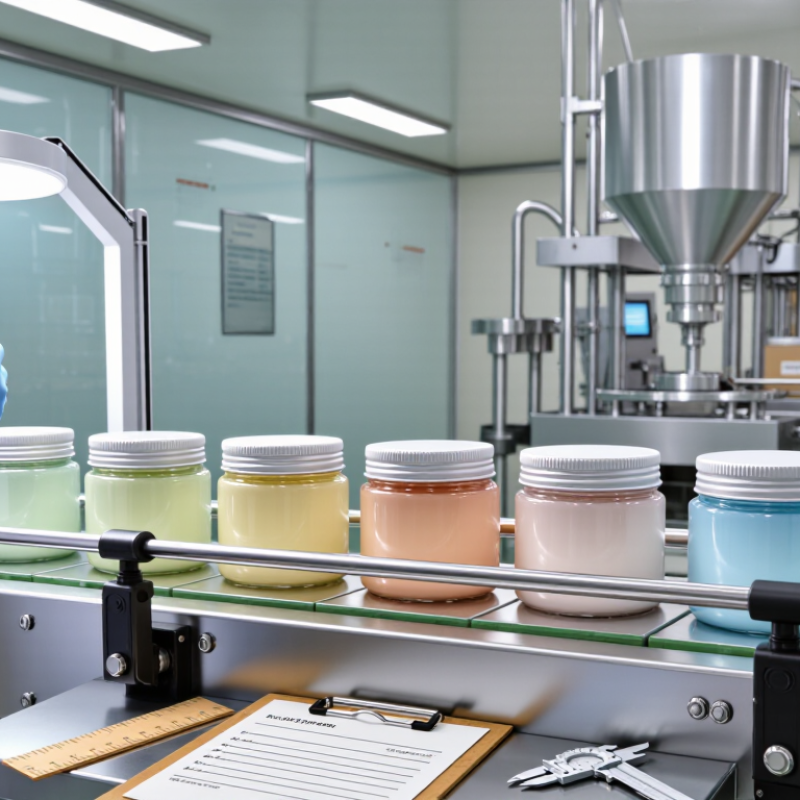
A reliable glass cream jar manufacturer in China shows its standards through repeatable production, not polished promises. During a factory visit, inspect the molding line, annealing process, and dust-control measures. A stable jar should feel balanced, with a smooth rim and consistent wall thickness. Ask for batch samples, dimensional reports, and closure-fit records. Proof matters.
Reliable wholesale supply also depends on material selection. The manufacturer should explain glass composition, color tolerance, coating limits, and compatibility with cream formulas. A jar can look beautiful yet fail after repeated opening, filling, or transport. Practical testing should include leak checks, drop simulations, torque checks, and heat-cold cycling. These details reveal whether quality control is routine or merely promised. Request traceable batch numbers and clear records for rejected pieces.
Experience appears in communication too. A dependable team answers technical questions directly and flags risks before mass production. They should provide a realistic sampling schedule, packaging plan, and production timeline. Transparent replies are valuable. Still, no factory is flawless. Even experienced manufacturers can miss a surface mark or misread a color reference. The stronger partner accepts corrections, records the cause, and adjusts the process. Before placing a large order, compare pilot samples with approved specifications under real filling conditions. That extra review may feel slow, but it protects the wholesale shipment from avoidable surprises.
| Evaluation Dimension | Practical Reference Data | What a Reliable Manufacturer Should Provide | Recommended Verification Method |
|---|---|---|---|
| Material Composition | Common cosmetic cream jars are made from soda-lime glass. Borosilicate glass is used when higher thermal or chemical resistance is required. | Clearly states the glass type, color, coating materials, and any recycled-content declaration. | Request a material specification, product safety documents, and representative samples. |
| Capacity and Dimensions | Typical cosmetic jar capacities include approximately 5 ml, 15 ml, 30 ml, 50 ml, and 100 ml. Actual fill volume depends on the product density and filling process. | Provides dimensional drawings, net capacity, overflow capacity, neck size, and tolerance information. | Compare technical drawings with physical samples and conduct a calibrated volume test. |
| Neck and Closure Compatibility | Cosmetic jars commonly use screw-thread closures. Compatibility depends on neck diameter, thread profile, liner, and cap material. | Confirms closure specifications and supplies jars, lids, liners, and inner plugs that fit consistently. | Perform repeated opening-and-closing, leakage, torque, and seal tests using the intended cream formula. |
| Dimensional Tolerance | Tolerance limits vary by jar design, tooling, and production process; they should be agreed in the approved technical drawing rather than assumed. | Uses documented inspection limits for height, diameter, neck finish, weight, and critical sealing surfaces. | Approve a golden sample and review inspection records from a production batch. |
| Appearance Quality | Relevant defects include cracks, chips, sharp edges, bubbles, stones, cords, scratches, color variation, and coating defects. | Maintains written cosmetic inspection standards with defined major, minor, and critical defect categories. | Use visual inspection under controlled lighting and record defect rates by batch. |
| Leakage and Seal Performance | Leakage risk is affected by thread accuracy, liner compression, cap torque, glass deformation, and product compatibility. | Defines a repeatable leak-test procedure and identifies the test duration, orientation, temperature, and acceptance criteria. | Test filled samples upright, inverted, and during simulated transport before mass production. |
| Decoration and Finishing | Available processes may include frosting, spraying, color coating, silk screening, hot stamping, labeling, and metallic decoration. | Provides decoration samples, color references, adhesion requirements, and protection instructions for finished surfaces. | Conduct rub, tape-adhesion, scratch, and chemical-resistance checks on decorated samples. |
| Product Compatibility | Essential oils, alcohol, acids, colorants, and preservatives may interact with coatings, liners, adhesives, or closures. | Supports compatibility trials using the buyer’s actual formula and packaging configuration. | Store filled samples under intended conditions and inspect odor, color, leakage, corrosion, and coating changes. |
| Quality Management | A documented quality system should control incoming materials, forming, annealing, decoration, assembly, inspection, and shipment. | Shares relevant quality procedures, inspection plans, corrective-action records, and traceability information. | Request an independent factory audit or conduct a documented supplier assessment. |
| Compliance Documentation | Requirements depend on the destination market, product category, decoration, packaging contact, and transport regulations. | Provides accurate declarations, test reports, restricted-substance information, and export documents where applicable. | Match document details with the exact jar, coating, liner, and production batch being purchased. |
| Packaging and Transport Protection | Glass requires dividers, trays, cartons, or other protective packaging to reduce impact and abrasion during handling. | Provides a defined packing method, carton quantity, pallet details, and breakage-control procedure. | Conduct a pre-shipment packaging review and inspect cartons for movement, compression, and damage protection. |
| Sampling and Mass Production | A production sample should represent the final materials, tooling, decoration, closure, and packing method. | Uses a written approval process before tooling release or mass production and controls unauthorized changes. | Sign off a pre-production sample and compare random production pieces against it. |
| Wholesale Commercial Terms | Pricing is influenced by capacity, glass weight, tooling, decoration, closure configuration, order quantity, packaging, and shipping terms. | Offers a transparent quotation separating tooling, sampling, unit price, decoration, packaging, inspection, and delivery charges. | Compare quotations using identical specifications, quantities, Incoterms, payment terms, and quality requirements. |
Note: Reference values are general industry guidance. Final acceptance criteria should be confirmed in the approved technical drawing, quality agreement, sample approval, and destination-market requirements.